Digital Intelligent Learning platform
The classroom time machine and the interdisciplinary workshop — the two tools teachers have used for years — now live together on the Digital Intelligent Learning platform. Same names, same use, still maintained here.
- 01Classroom time machineLegacyRecord an everyday lesson; it is split into teaching phases automatically, and the review talks about each clip.See the time machine
- 02Interdisciplinary workshopLegacyWritten around one real question, not three lesson plans stapled together.See the workshop
01 / 04
Classroom time machineLegacy
Record an everyday lesson; it is split into teaching phases automatically, and the review talks about each clip.
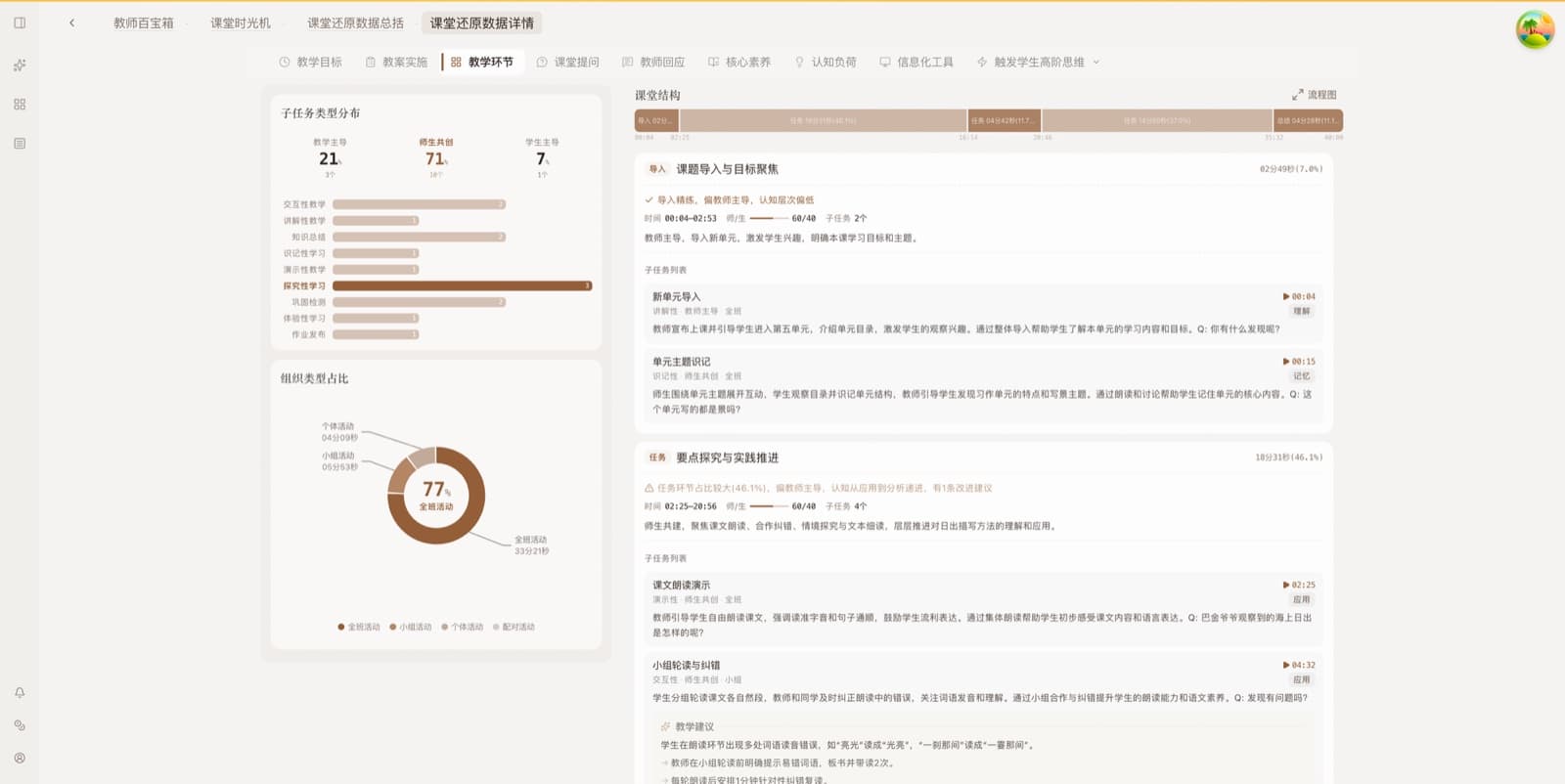
- A lesson is restored as a timeline of teaching phases — structure, timing and teacher-student balance at a glance
- The classroom dialogue is transcribed line by line, with question and feedback functions tagged; jump back to any moment
- Nine analysis dimensions, from objectives and core competencies to cognitive load and higher-order thinking, each conclusion backed by raw evidence
- Compare lessons side by side, so faculty discussion moves from impressions to what the data says

02 / 04
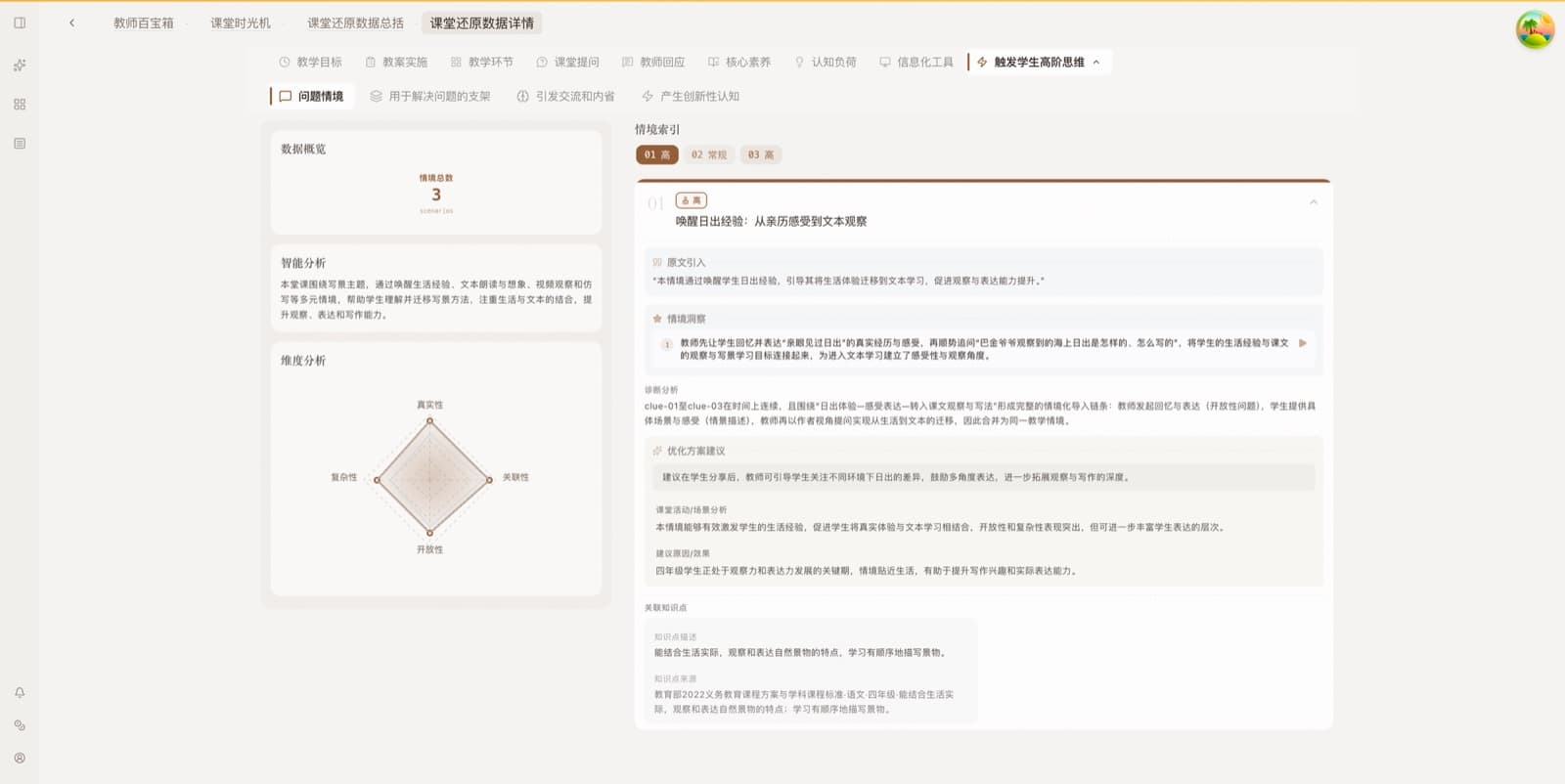
How far was student thinking pushed?
An innovation radar assesses how far higher-order thinking was engaged, counting the innovative cognitive moves and what set them off; every problem scenario carries a diagnosis and advice, traceable back to the raw dialogue.
03 / 04
Interdisciplinary workshopLegacy
Written around one real question, not three lesson plans stapled together.
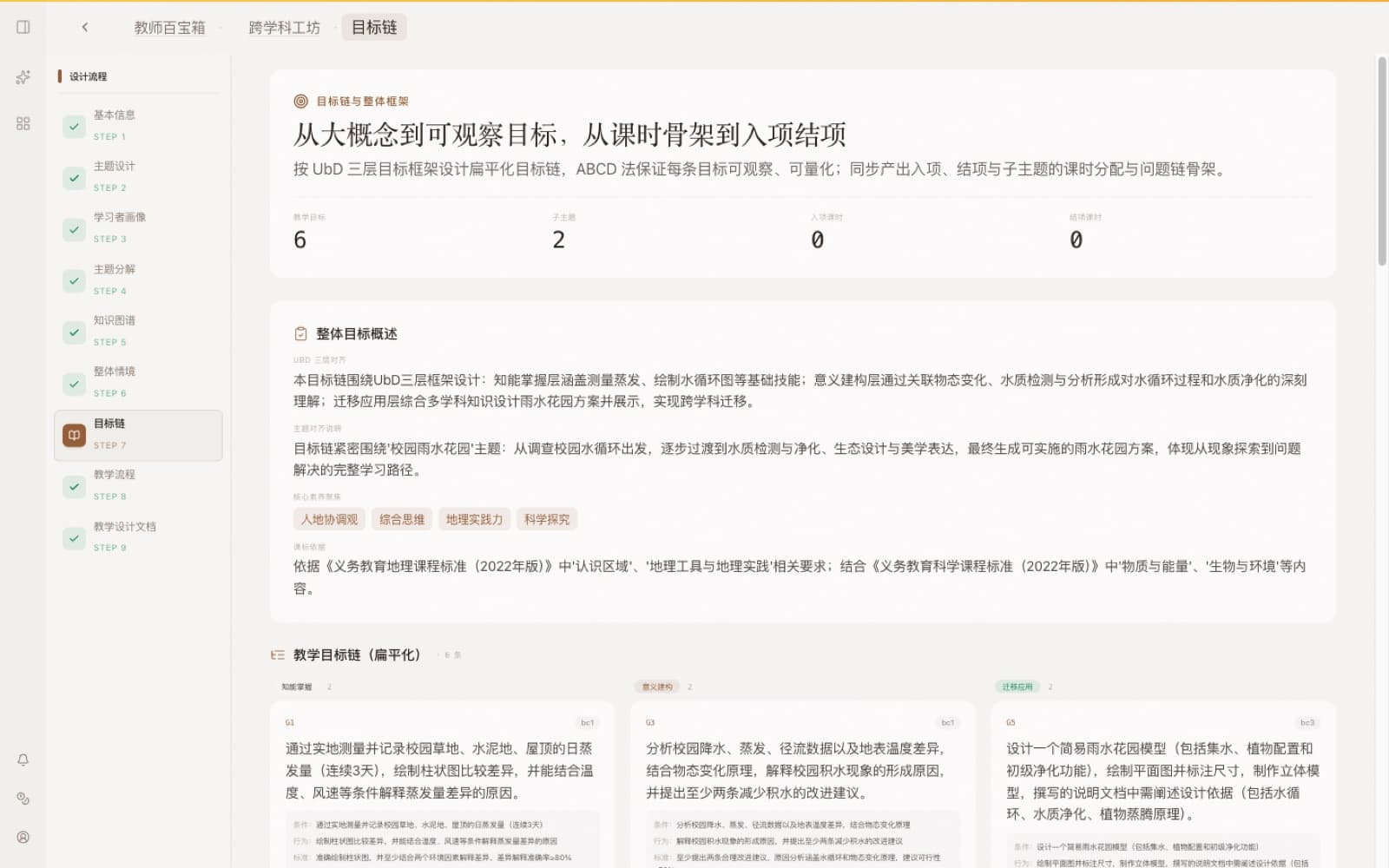
- Nine guided steps take a theme from framing and learner profile down to lesson-level design
- A big-idea map links knowledge points across subjects into transferable concepts, making the crossings visible
- GRASPS sets the learning in one real task; goals fall out layer by layer into observable, assessable chains
- Each step opens as a draft with scaffolds; the teacher reviews, edits and finalizes — never a one-click finished plan

04 / 04
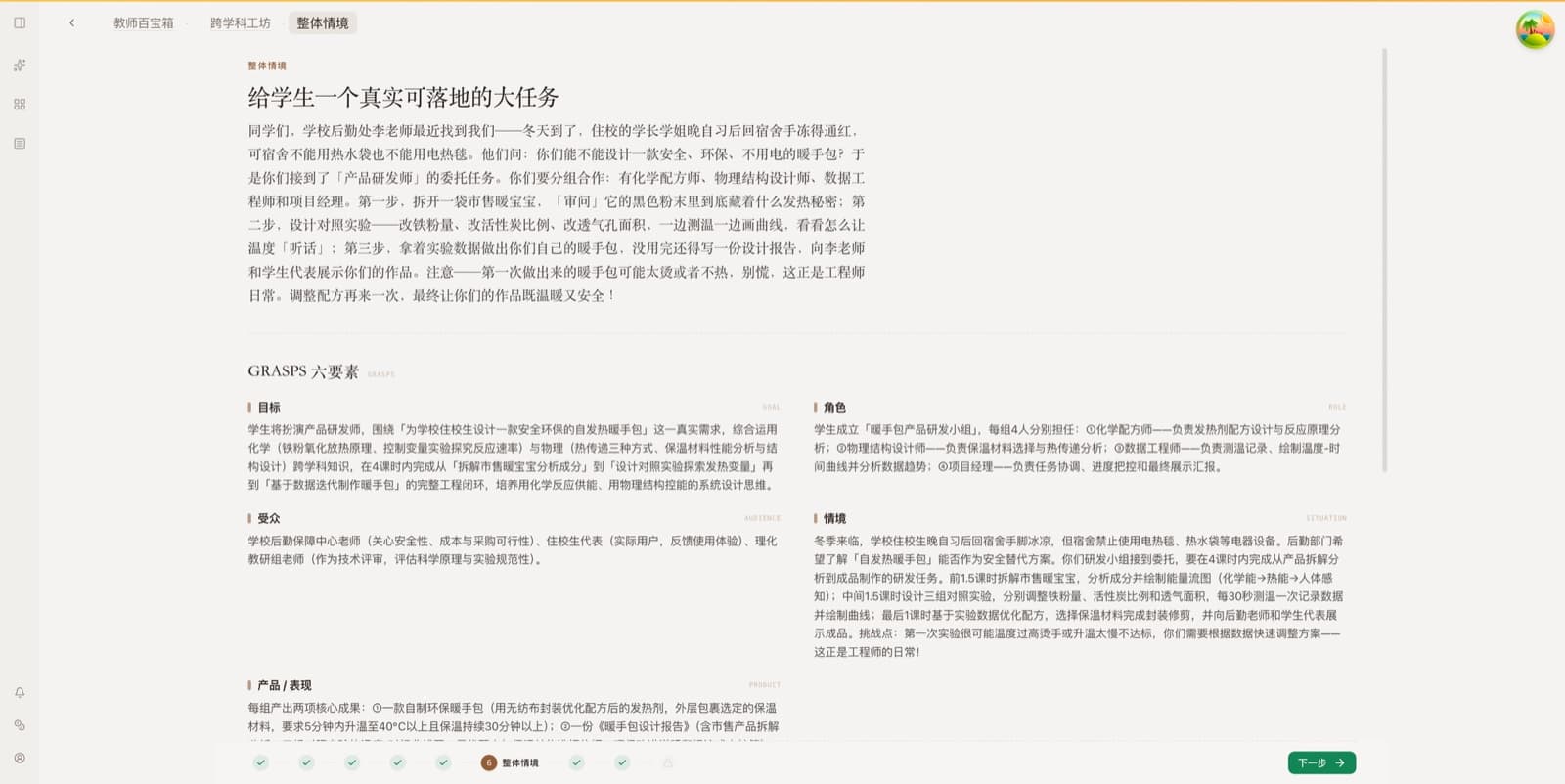
One real, landable task for the students
Six GRASPS elements — goal, role, audience, situation, product, standard — set the learning inside one real task, not a paper exercise.